Contents
Build the specification
Define the use case and approval work
Record who uses the product, where they use it and which outcomes are required. Confirm whether the hot-fill process and cooling steps change appearance or shrinkage. Share that brief with purchasing, product development and the person approving the final label.
Keep the formula and package paired
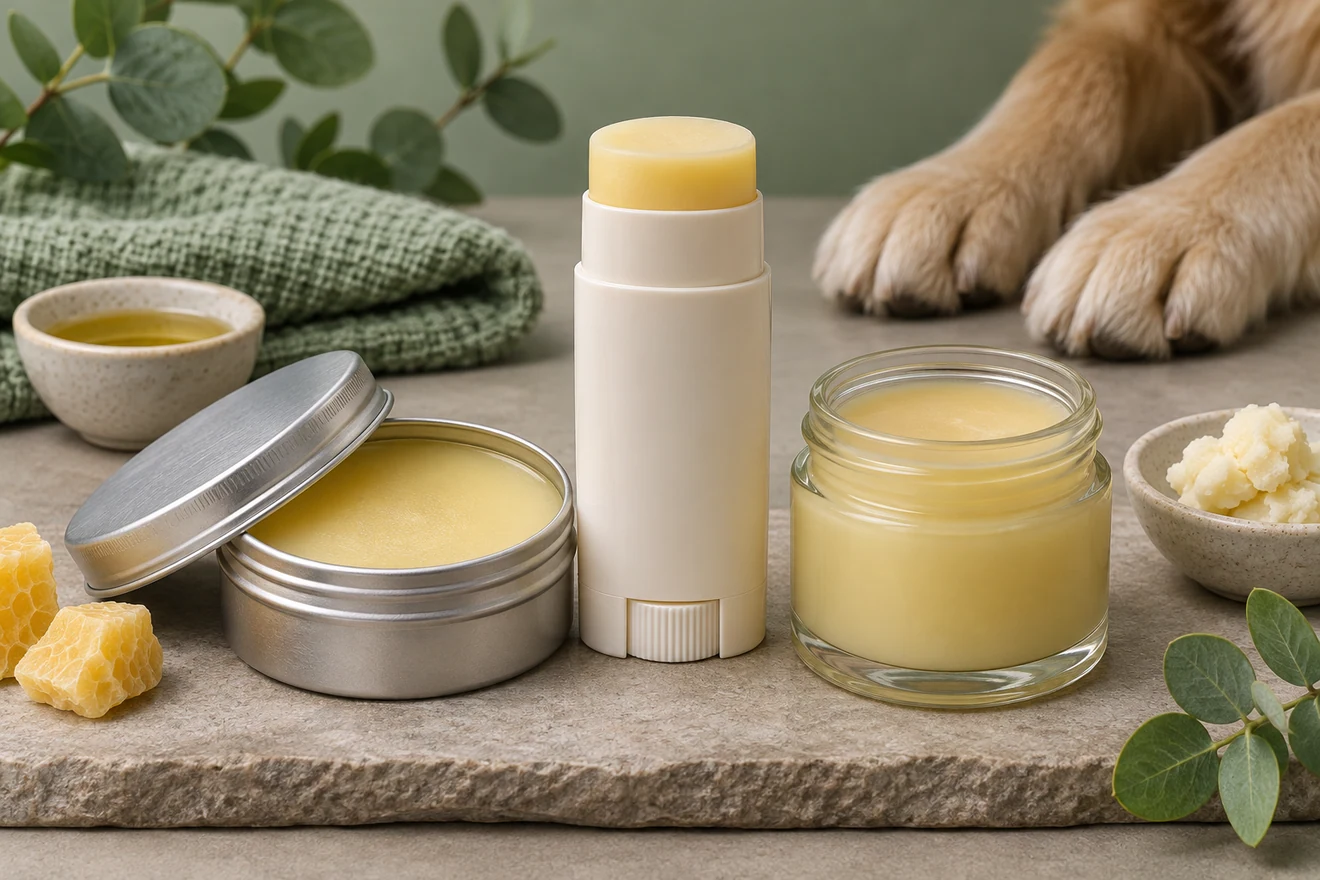
Request temperature-conditioned samples checked for leakage and texture. Label samples with a revision and lot reference and include the closure in the approval record. Compare available product directions such as Pet Paw Balm and Pet Nose Balm.
Compare the routes
| Route | How to scope the quote | Decision evidence |
|---|---|---|
| Twist-up stick | Quote it against the intended channel, pack size, artwork and forecast. Ask which components can be sampled from current inventory. | Use this as the reference route. Record payoff, warm storage and usable fill. |
| Screw tin | Price this at the same finished-unit quantity and destination terms. Flag any extra development, materials or packaging commitments. | Compare with the reference using temperature-conditioned samples checked for leakage and texture. |
Practical sampling guide
- Compare amount transferred with a consistent stroke and surface.
- Collect temperature-conditioned samples checked for leakage and texture. Log the sample date, dose and conditions so the team can repeat the comparison.
- Repeat dispensing after warm conditioning and check that the remaining fill is usable at the end of the pack.
- Ask the supplier to itemize pilot and repeat-order costs. File the acceptance record with the approved sample and specification.
Buyer FAQ
Can I start from a stock formula?
Ask for a stock sample and state the acceptance criteria for payoff, warm storage and usable fill. Scope a custom revision if the base fails on a requirement that matters to the buyer.
What should the quotation include?
Ask for separate formula, primary packaging, decoration and testing line items. Request finished-unit minimums for the twist-up stick and the screw tin and identify any separate material commitments.
What should I approve before production?
Approve the formula revision, final pack and verified artwork together. Pair the signed specification with temperature-conditioned samples checked for leakage and texture and identify who can approve any later substitution.
What is the practical difference between twist-up stick and screw tin?
Judge both against the same use case and score payoff, warm storage and usable fill. A stick that looks clean at room temperature may sweat, retract, or soften during transport.
What evidence should I request with the samples?
Request temperature-conditioned samples checked for leakage and texture. Ask which formula revision, packaging revision, lot and test conditions the evidence covers.
How should the first comparison be run?
Compare amount transferred with a consistent stroke and surface.
What should I clarify before ordering packaging?
Confirm whether the hot-fill process and cooling steps change appearance or shrinkage.
What should I do if the first prototype misses the target?
Repeat dispensing after warm conditioning and check that the remaining fill is usable at the end of the pack.
Conclusion
For a pet paw balm project, commit the order after you have compared twist-up stick and screw tin against the same criteria. Make payoff, warm storage and usable fill part of your sign-off. Explore the Pet Care catalog for related OEM/ODM formats.
Discuss your OEM/ODM brief
WhatsApp +86 15346717907 · adon@oempetcaresupplier.com · oempetcaresupplier.com