Contents
What changed in May 2026
California’s Office of Administrative Law approved the permanent SB 54 regulations on 1 May 2026, when they became effective. The program addresses single-use packaging and single-use plastic food service ware, with rules for determining covered materials and obligations. Start with the CalRecycle program overview and covered material categories. Have the responsible business confirm which components and sales flows belong in its reporting. CalRecycle’s final approval notice.
Build a record from measured components
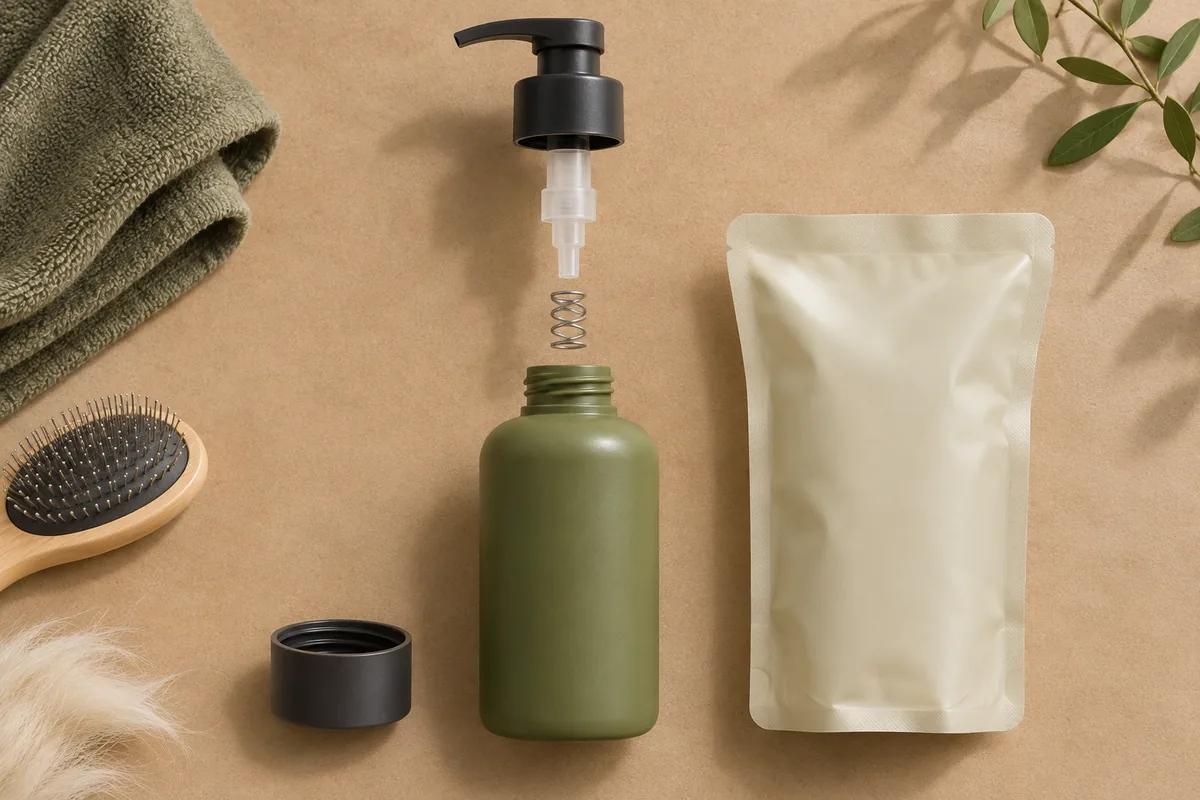
For a pet shampoo bottle, ask the supplier to identify bottle resin, closure, label face, adhesive and any pump subassembly it can document. Measure representative empty parts and reconcile the sum against the empty assembled weight. Log packaging at the retail, case and shipment levels separately. A shipper used for a direct-to-consumer parcel can have a different reporting treatment from the retail pack. Capture the configuration, material descriptions, measurement method and source records in the OEM packaging brief.
Compare source records
| Option or component | Evidence to check | Buying decision |
|---|---|---|
| Bottle and label | Request the part specifications, empty masses, resin and label construction. | Look up the applicable category against the current list and retain the decision record. |
| Pump assembly | Request the part number, supplier drawing and material breakdown where available. | Flag mixed-material or unidentified parts for the reporting team instead of guessing a category. |
| Retail carton and e-commerce mailer | Record material, mass, count per shipment and which party adds the item. | Avoid omissions or double-counting across the brand, importer and fulfillment partner. |
Practical guide
- List every packaging configuration sold into California and identify who is responsible for determining producer status.
- Create a mass and material record for each component. Keep separate records for retail, multipack and shipment configurations.
- Match records to accepted categories with your reporting team. Mark unknown compositions for supplier follow-up.
- Use the packaging sample review to compare revisions before approval. Ask suppliers to provide written notice for component substitutions.
Frequently asked questions
Who should own the component log?
Name one owner in packaging or compliance. Have the supplier provide specifications and operations confirm which versions actually shipped.
Can two products share a record?
Yes when the packaging configuration and parts are identical. Keep each SKU’s sales linkage and confirm case and shipment components separately.
When should the supplier update data?
Set a change-notice checkpoint before approving new resin, label stock, closure or shipment materials.
Does the effective date mean every reporting or design milestone started in May?
The regulations took effect in May. Check the current program calendar and which duties apply to your role and materials.
Can the supplier decide who the California producer is?
The supplier can explain the transaction and provide pack data. The parties should confirm producer status using the state’s rules and actual distribution model.
Is the weight of a filled bottle sufficient?
No. Record the packaging components separately from the product and identify the version weighed.
What should I do if a pump contains an undocumented spring or gasket?
Request the subassembly specification and record the gap for whoever assigns the category.
Will a lighter bottle reduce the recorded weight automatically?
Confirm the new part mass and effective shipment dates. Check leak resistance and transit performance before using it as a replacement.
Conclusion
An auditable component file follows each shipment from part revision to SKU. Start with a controlled baseline and keep changes dated so the reporting team can reconcile quantities.
WhatsApp +86 15346717907
Email adon@oempetcaresupplier.com
Website oempetcaresupplier.com