A supplier may quote a minimum number of finished bottles, while the packaging producer quotes by component and the factory makes shampoo by batch weight. For a new brand, those limits can produce three different numbers for the same purchase order. This guide shows how to ask for a private label dog shampoo MOQ that reflects your chosen formula, bottle and label, then check how much inventory you are actually committing to.
What determines the minimum order?
Start with the smallest validated production batch
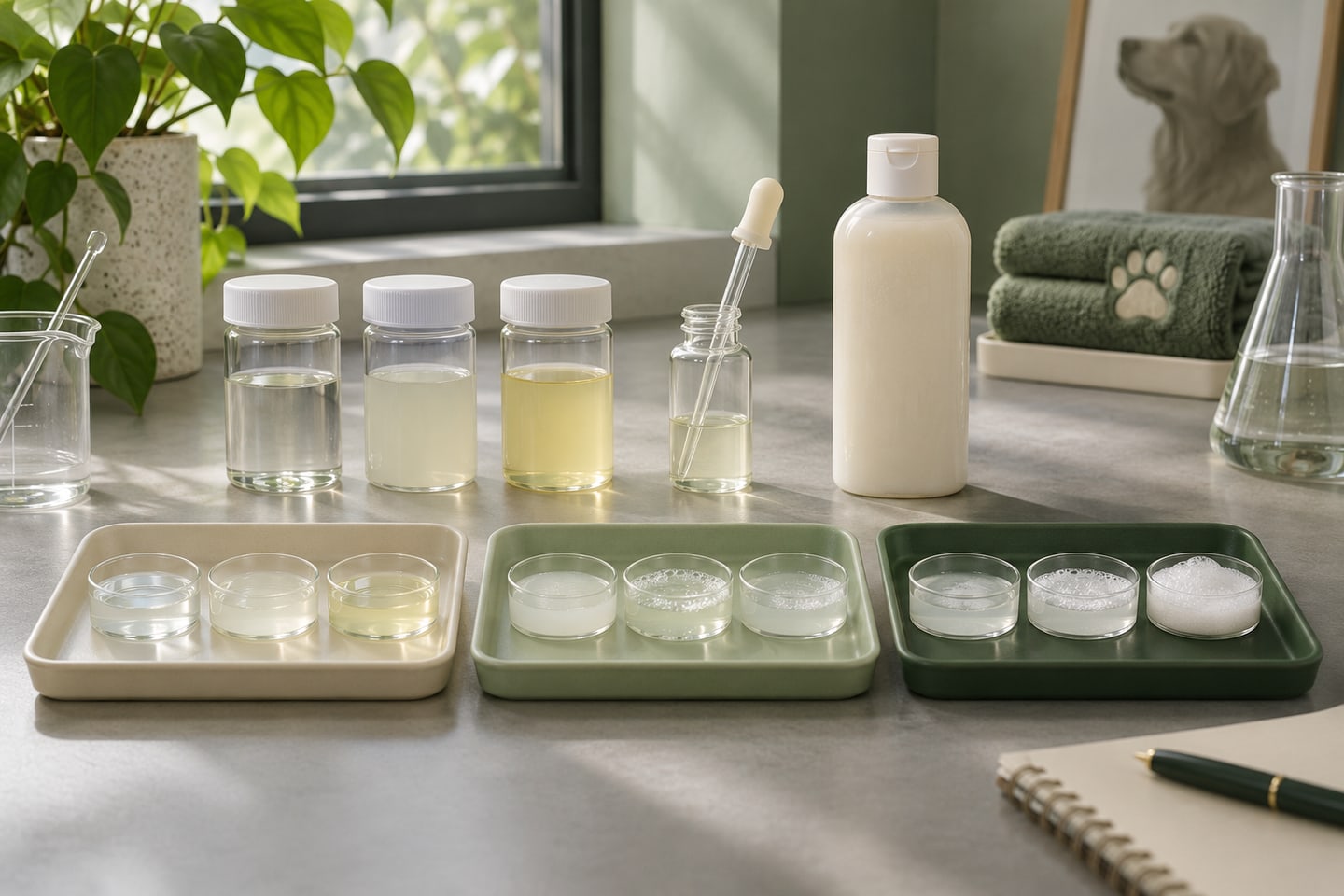
Ask the manufacturer for the minimum usable batch in kilograms and whether that is the amount before or after normal processing and filling losses. Tank working volume, mixing and deaeration can influence the smallest practical batch. To translate kilograms into bottles, use the agreed fill volume and the formula’s measured density. As an illustration, 100 kg at 1.04 kg/L yields about 96 L before losses, or about 384 nominal 250 mL fills before line losses and fill allowance. Ask for a written expected saleable output range.
Separate the formula, components and finished SKU
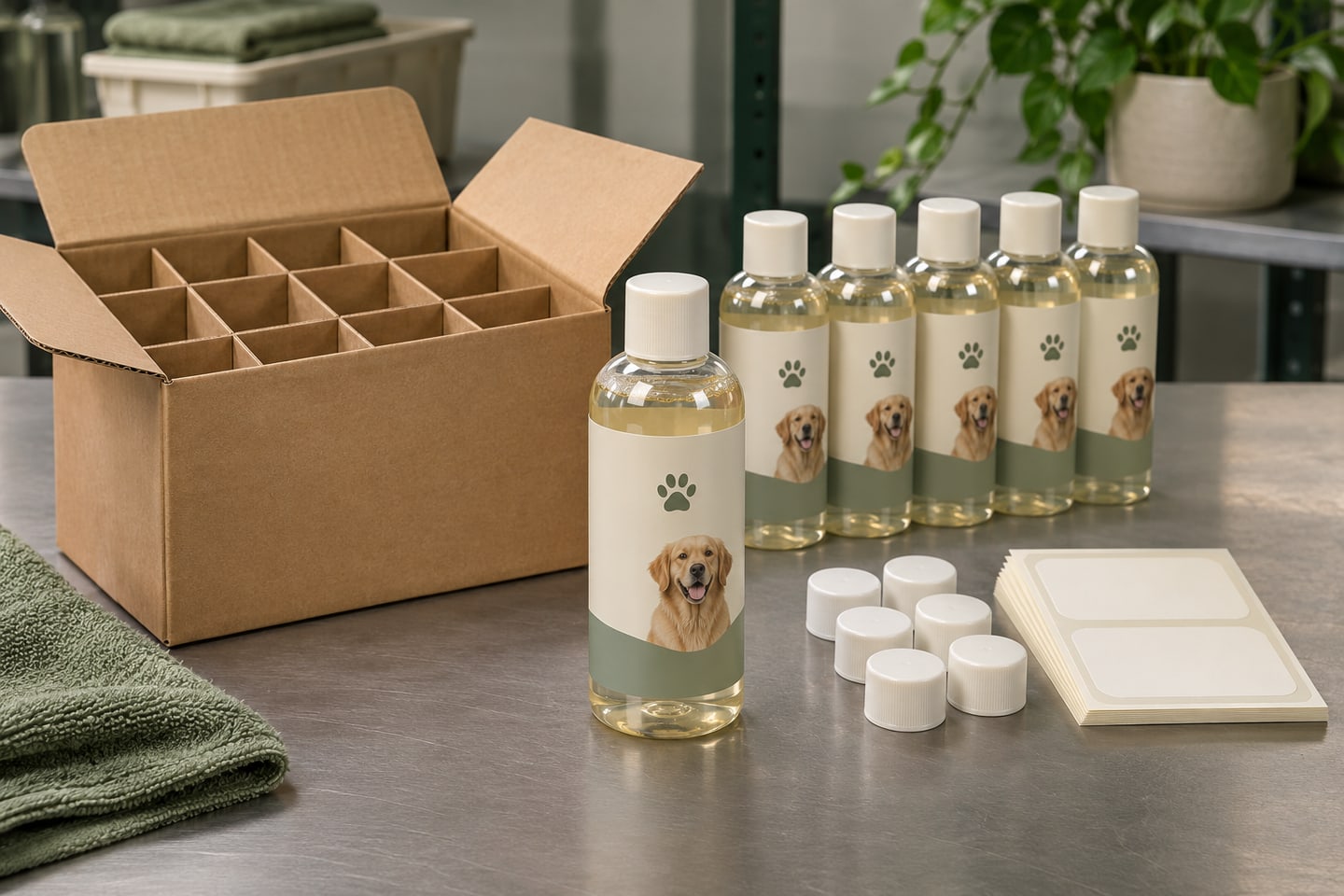
One bulk batch may be split across two bottle sizes if the formula is identical and both runs can be filled economically. Each new fragrance, cap color or label design can bring a separate minimum or setup charge. Ask who pays for unused printed labels, whether stock bottles and caps can be pooled across SKUs, and how long the factory can store prepaid components. Review the daily pet shampoo product and the OEM and ODM service options before fixing your specification.
Compare three first-order configurations
| Component choice | What can drive the minimum | What to confirm in writing |
|---|---|---|
| Existing formula and stock bottle | Filling line setup or label print quantity | Finished quantity per artwork, cap availability and any pilot surcharge |
| Existing formula and custom-printed bottle | Decoration or bottle supplier minimum | Minimum per color, ownership of spare bottles and rules for storage |
| Custom formula and dedicated packaging | Batch scale, ingredient packs and component minimums | Smallest validated batch, testing scope and who pays for excess inputs |
Check the reorder before buying the first run
Get reorder pricing and lead time for the same approved configuration. Ask whether a component reservation is needed to keep that lead time, and whether a substitute would require new sample approval. Compare how much cash stays in spare inventory after the first shipment. A low first-run bottle count can still tie up cash if the quote includes a separate commitment for thousands of custom caps.
Model the first two orders together
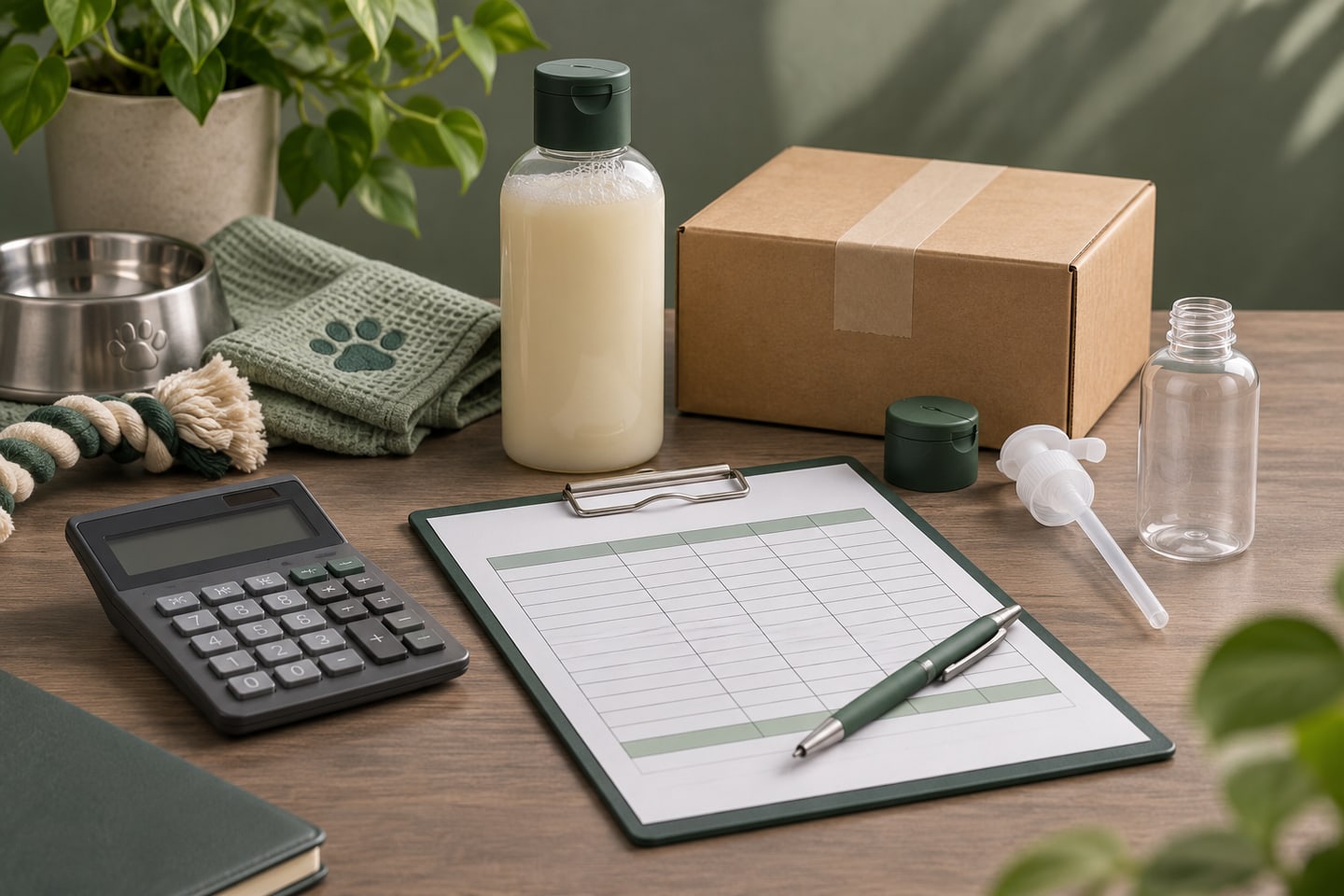
On your worksheet, list the bill of materials by component, the supplier minimum, the amount consumed by the first run and the amount remaining. Add artwork revisions and the shelf life or agreed storage period for remaining stock. Ask whether unused bottles can be diverted to a second SKU if the first one sells more slowly than expected. Put a date and a buyer on any commitment to use or dispose of surplus. Once the order size is clear, use the existing supplier quote guide to compare the bids it produces.
Practical guide to an MOQ request
- Write down the destination market, expected sales by channel, fill size, first-order quantity and target reorder window.
- Request two quotes built on the same formula and fill. Ask for a stock-pack option and a custom-pack option with separate line items for components and setup.
- Record whether the MOQ applies per batch, scent, bottle, label or finished SKU. Confirm the fill yield, tolerance and treatment of leftovers.
- Confirm sample approval, artwork proof and material availability before a production slot is committed. Send the two configurations through the project inquiry form.
Frequently asked questions
General procurement questions
Can I request a sample before a production order?
Ask for a presentation sample and, where the packaging changes, a sample in the intended bottle. The two samples can answer different questions.
When does the production lead time start?
Request separate dates for stock allocation, sample approval, artwork approval and production. Ask which milestone starts the quoted clock.
What should I include when contacting a manufacturer?
Include target market, fill size, planned order volume, formula preference, packaging reference and deadline.
Questions about minimum orders
What is a realistic minimum order for custom dog shampoo?
Ask for the minimum for your precise brief. Use saleable units and compare batch, filling and component thresholds before choosing a quantity.
Can I split the dog shampoo MOQ across scents?
A fragrance change can require a separate variant run and review. Ask about minimums per scent and each fill setup.
Can two bottle sizes share one bulk shampoo batch?
Potentially, when they share the approved formula. Confirm separate filling charges, component minimums and any extra handling.
Who owns leftover packaging from the first order?
Set ownership, storage fees, expiry of storage, inspection rights and disposal or return terms in writing.
Why can a pilot run cost more per bottle?
Setup labor, line cleaning, artwork and fixed handling costs are spread across fewer saleable units.
Conclusion
Choose the first order from an itemized set of limits. Compare saleable bottles and cash tied up in components under each configuration, then approve a quantity that fits both your launch forecast and your reorder plan.
Discuss your OEM or ODM project with MUYE
WhatsApp: +86 15346717907 · Email: adon@oempetcaresupplier.com · Website: oempetcaresupplier.com