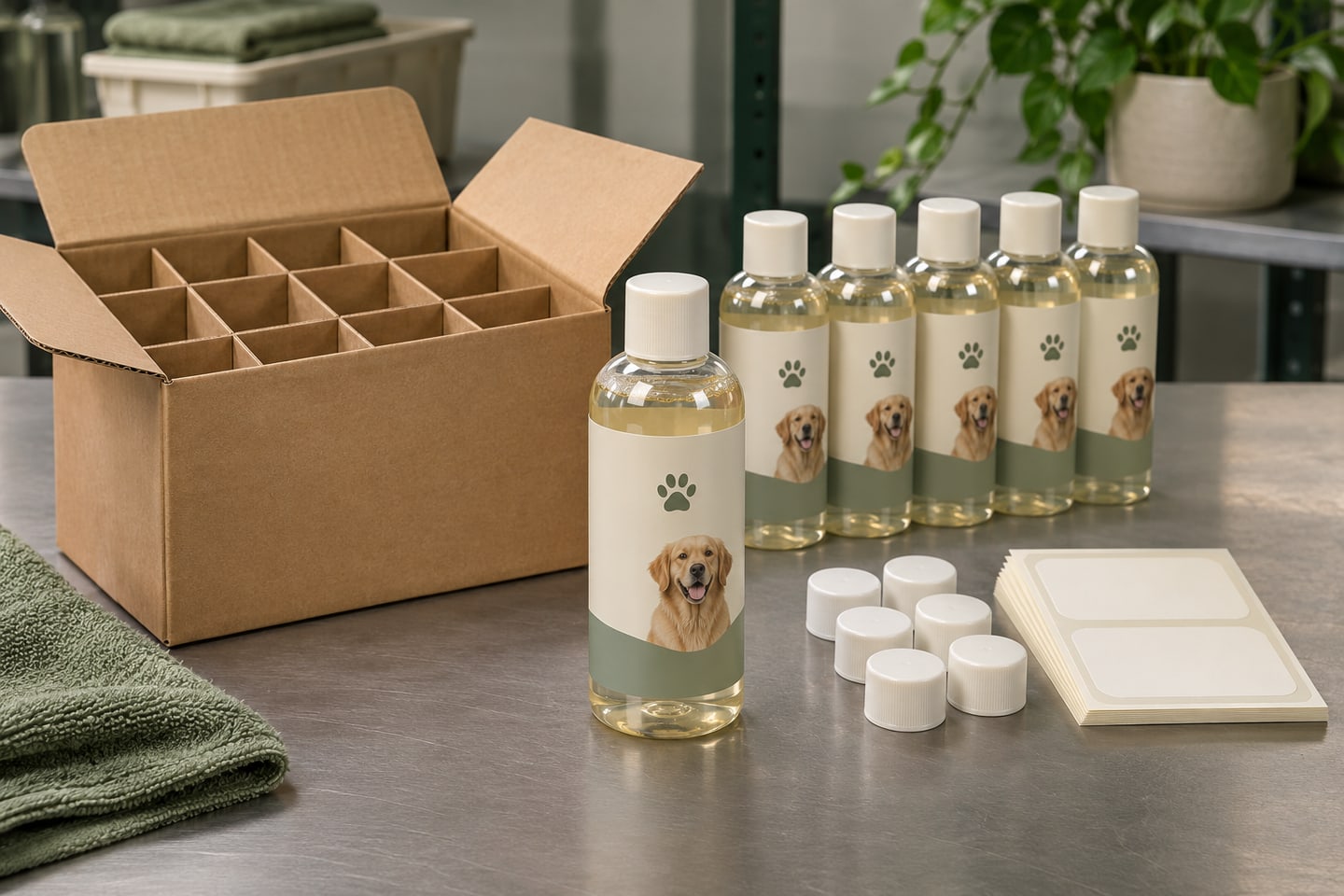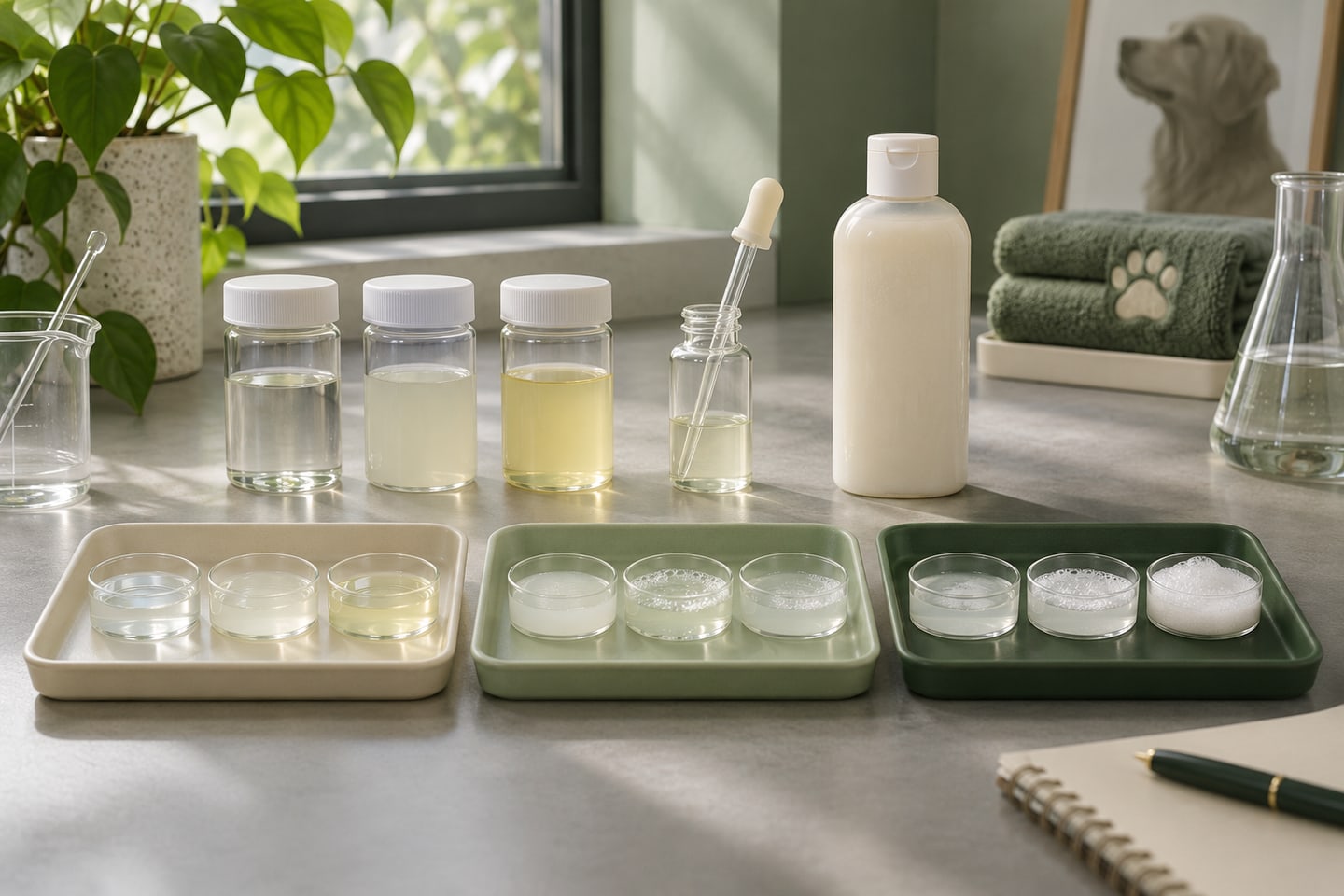
A launch date can slip even when a dog shampoo sample has been approved. The pump may not have been tested with the final formula, the artwork may still show outdated directions, or freight may have been planned from the wrong date. Build your first order around approvals that purchasing, quality and logistics can verify independently.
Plan the launch from the required arrival date
Define the buyer, channel and product brief
Specify who will sell or use the product, the intended dog coat or routine, the packaging format and countries of sale. Give suppliers a target order quantity and the date stock must reach your warehouse. Use a target landed cost and ask for the available pack and formula options. A one-page brief should make clear what is required, what is preferred, and what the factory can propose. The pet wash catalog and project workflow can help frame the brief.
Give each approval an owner
Assign someone to own sample feedback and someone to approve the label, and ask who signs off the finished goods. For an aqueous shampoo, define which records you expect to review, such as stability and compatibility evidence appropriate to the product and relevant microbiological checks. A certificate of analysis can document results against specified release parameters for a batch. Check its lot number, test list and limits against your agreed specification.
Keep one revision history for purchasing and quality
Record the formula code, bill of materials, artwork version and carton specification in a shared release record. Keep the approved sample code next to them. If a bottle supplier requests a material change after artwork approval, assign a reviewer to determine whether compatibility, fit or a label proof needs to be reopened. Ask buyers to check the batch certificate guide when they agree on which records to request.
Compare the decisions that release each stage
| Milestone | Evidence to request | What to resolve before moving forward |
|---|---|---|
| Brief accepted | Written product scope, preliminary quote and proposed schedule | Destination, product directions, formula route and fill size |
| Sample approved | Coded sample, feedback record and final pack reference | Formula version, final-use performance and package compatibility |
| Artwork approved | Dieline, proof and revision history | Directions, claims, traceability space and barcode check |
| Production released | Purchase order and approved specifications | Final quantities, tolerances, cartons and inspection arrangements |
| Shipment released | Batch records required by contract, shipping documents and carton details | Lot match, final inspection and delivery responsibilities |
Classify the product before printing labels
For U.S. sales, use the FDA’s March 2019 grooming-aids guide to review products intended solely for cleansing or beautifying. Review the complete intended use, including packaging and online language. For an EU consumer product, assess whether and how Regulation (EU) 2023/988 applies. It has applied since 13 December 2024 and its scope accounts for specific Union safety rules covering the same objective. For the finished EU mixture, check any applicable CLP classification and related labeling or packaging obligations. FDA guidance · EU General Product Safety Regulation · ECHA mixture classification.
Practical launch checklist
- Work backwards from warehouse receipt. Allocate time for inbound freight, clearance, factory release, last sample revisions and artwork proofing.
- Send one signed brief to purchasing and the supplier. Supply the fill, pack, initial quantity, market and required evidence together through project inquiries.
- Approve a coded reference sample and a final-package sample. Store the code with the supplier’s specification and a signed artwork proof.
- Add documents, lot codes, packing instructions, quality criteria and remedies for nonconforming shipments to the purchase order or quality agreement.
- At dispatch, reconcile batch and carton records with the approved order. At receipt, record shipment condition, quantity and traceability information before distributing.
Frequently asked questions
General procurement questions
Can I begin with one SKU?
Yes. A single product configuration can simplify packaging purchases and approval, and gives you a clear baseline for the first reorder.
Who supplies label artwork?
Ask the supplier for the dieline and print requirements. Confirm which party provides, reviews and signs the production proof.
How can I compare suppliers fairly?
Send the same brief and ask each for sample terms, a quote with named inclusions and a lead time tied to specific approvals.
Questions about the first launch
When should I book freight for a dog shampoo launch?
Get preliminary rates early. Confirm the booking against a realistic goods-ready date, final cartons and the agreed delivery term.
Which sample should I sign off for mass production?
Approve the version tied to the manufacturing specification. Record the formula and packaging codes, and retain a matching reference.
Can I change the label after sample approval?
Yes, if the printer’s release deadline permits. New claims or directions should go back through the appropriate review before approval.
What should a first purchase order include?
List SKU and revision, saleable quantity, price, packing, delivery term and named place, agreed checks and required documents.
What happens if a component changes during production?
Require notification and written approval, with an impact review for the formula, package, artwork and schedule.
Conclusion
An achievable launch schedule is built from verifiable approvals. Set the required receipt date, assign an owner to each release, and keep the signed brief, samples, artwork and shipping records tied to the same SKU.
Discuss your OEM or ODM project with MUYE
WhatsApp: +86 15346717907 · Email: adon@oempetcaresupplier.com · Website: oempetcaresupplier.com