A lower price per bottle can lead to a higher first-order bill when the quote excludes printing, testing, freight or unused packaging. Compare offers with the same fill, formula route and delivery point. Then calculate what each saleable bottle costs by the time it reaches your warehouse.
Break down the price before negotiating
Divide recurring costs from launch-only costs
Ask for the filled and packed unit price, then list one-time charges separately. Development, tooling, artwork setup and qualification checks may be billed up front. Ingredients and packaging are recurring costs, while some quality checks may recur per batch. Ask whether distribution or marketplace requirements change the closure, label adhesive, tamper-evident feature or carton specification. Request the total commitment for components that must be bought beyond the finished-goods quantity.
Ask how the formula and bottle affect the quote
An ingredient change can alter sourcing and batch work and a viscosity change can affect filling speed or dispenser choice. Different bottle resins and closure designs can change pack cost and compatibility review. Compare accurate specifications on the OEM and ODM service page and the daily pet shampoo page before assuming offers are interchangeable.
Compare quote line items at equal scope
| Line item | Ask the supplier | Recording rule for the buyer |
|---|---|---|
| Formula and filling | Which fill volume, batch size and tolerance does the price cover? | Use the same formula route and expected accepted quantity for every bidder |
| Pack and decoration | Which bottle, closure, labels and cartons are included? | List approved components and prepaid surplus separately |
| Development and testing | Are fees per project, per SKU or per batch? | Separate first run, retest and reorder costs |
| Delivery and import | What is the named place and agreed Incoterms edition? | Quote missing freight, brokerage and nonrecoverable import costs separately |
| Returns and deductions | Who pays if units fail the agreed inspection criteria? | Base the calculation on saleable units and document potential offsets |
Calculate landed cost from accepted units
For illustration, suppose 1,000 planned bottles cost $2.10 each, one-time charges total $250 and freight and nonrecoverable import expenses total $540. The first-run total is $2,890. If 980 bottles are accepted as saleable, landed cost is approximately $2.95 per saleable bottle before channel fees. A $2.10 supplier quote and $2.95 landed cost answer different questions. Apply the same assumptions when comparing suppliers, and model reorders separately when launch-only charges drop out.
Compare the base case and a downside case
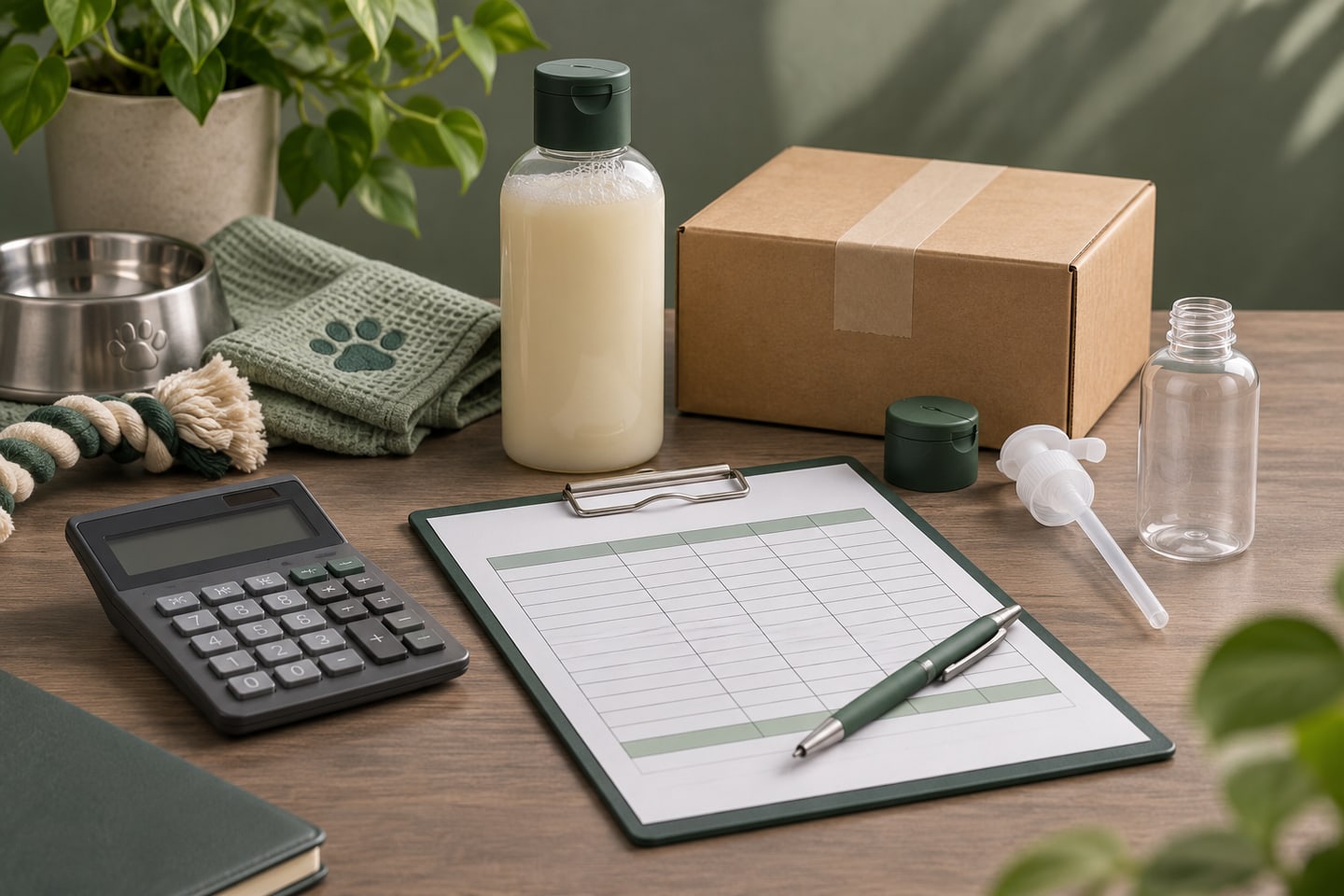
Using the same illustration, an additional $180 in freight and 950 accepted bottles raises the cost to about $3.23 per bottle. For a reorder of 1,000 planned bottles with 980 accepted, the same base transport costs and no $250 launch charge give a cost of about $2.69 per bottle. Record each assumption in its own spreadsheet column, and keep any recoverable tax or inventory deposit visible for cash planning. Agree how replacement units and credits will be treated. For the earlier step of aligning the factory specifications, use the supplier quote comparison guide.
Practical guide to requesting a comparable quote
- Prepare a shared request for quotation covering the destination, pack size, forecast, order quantity, formula direction, packaging and deadline.
- Request written prices at two realistic quantities and require the same spec at each tier. Ask which inputs trigger a revised price.
- Record setup, testing, prepaid pack materials, freight, import costs and expected yield in separate columns. Compare both total cash due and landed cost.
- Ask for payment milestones, quotation validity, reorder terms and an explicit list of exclusions. Send the brief through the quote inquiry form.
Frequently asked questions
General procurement questions
Do I need a finished specification to get a quote?
A structured brief can support an estimate. A release-ready quote requires the detailed formula route, pack, order quantity and delivery scope.
Can sample fees be credited against production?
Ask for written terms, including which sample fees are eligible and what order size or deadline triggers the credit.
What information is needed for a freight estimate?
Provide origin and destination, ship date, carton quantity, dimensions, gross weight and any transport classification that applies.
Questions about private label dog shampoo cost
Why does cost per bottle fall at higher quantities?
Some setup and print charges are spread over more units. Check where labor, component or freight tiers create actual savings.
How do I estimate cost if my order uses two scents?
Model both variants separately. Enter their individual batch or filling minimums, labels, sample work and any overlapping costs.
Should I include packaging inventory in landed cost?
Track extra prepaid components as a cash commitment. To compare current shipment cost, apply a consistent rule for allocation and future use.
What cost should I use for pricing a reorder?
Use the recurring quote at the expected volume plus updated transport and import costs, with any recurring tests or storage fees.
How can I tell if a low quote omits something important?
Reconcile the bill of materials, tests, shipping point and saleable-unit basis line by line. Request explicit exclusions from the supplier.
Conclusion
Use a common brief, compare fixed and recurring expenses separately, and divide the total attributable cost by saleable units. That gives you a first-order budget you can compare with your margin and working-capital targets.
Discuss your OEM or ODM project with MUYE
WhatsApp: +86 15346717907 · Email: adon@oempetcaresupplier.com · Website: oempetcaresupplier.com