A lab sample may perform well and still be difficult to dispense from the bottle planned for production. Feedback such as “too thick” also tells a supplier very little without a reference, test conditions or an agreed preference. Use this dog shampoo sample checklist to separate product performance, package usability and evidence of consistent manufacture.
Use a controlled sample review
Compare coded samples under matching conditions
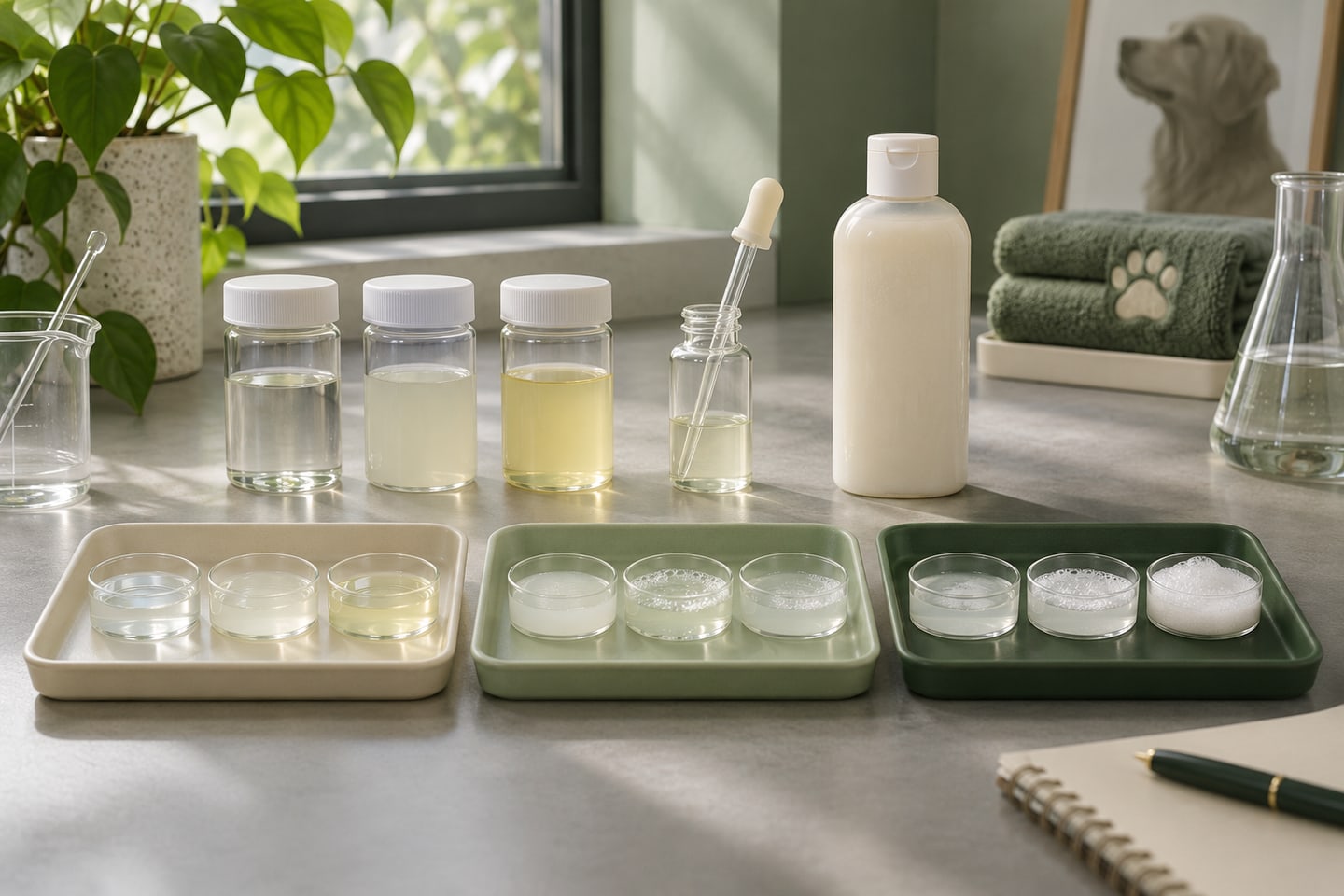
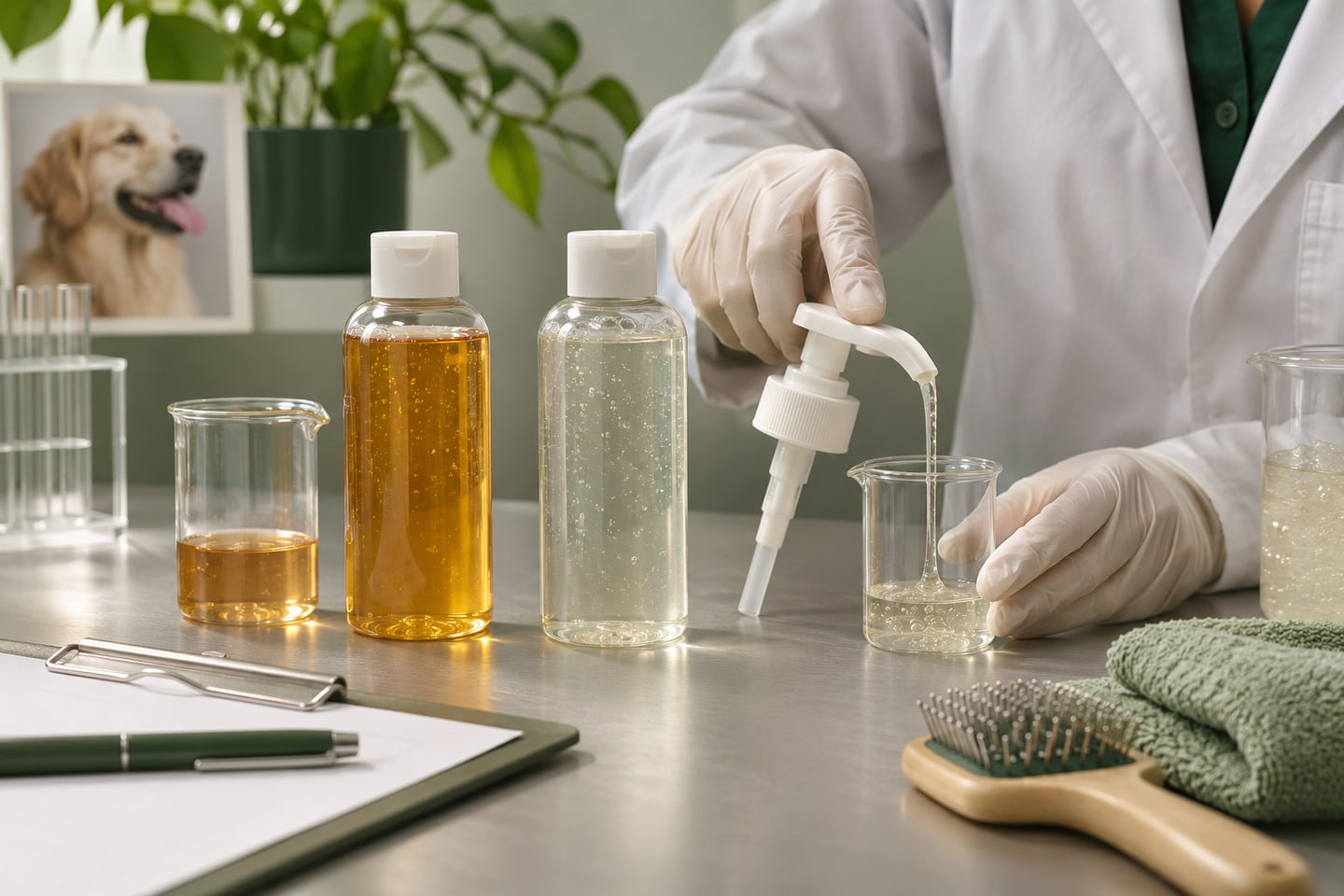
Ask for a reference number and the formula and packaging revisions. Compare a benchmark and the candidate using the same application amount, water conditions, instructions and scoring sheet. A bench review of dispensing and rinsing can be useful for screening. Any use assessment with dogs should follow the reviewed directions, be planned with appropriate supervision and stop if a sign of discomfort occurs. Record observations, individual test conditions and the reason for each requested change.
Review pH, viscosity and microbiology by purpose
Ask how pH and viscosity are measured. A useful viscosity record identifies the method and temperature, plus the spindle and speed where relevant. Ask the supplier or lab to explain the evidence supporting stability, preservation and batch release for the final aqueous formula. A microbiological quality check and a preservative effectiveness assessment address different questions. The former is a check on microbial quality at a point in time. The latter evaluates protection under defined test conditions. ISO 11930:2019, amended in 2022, is a cosmetics standard that can serve as a technical reference if a qualified lab finds it suitable for the product. Its scope does not itself establish a pet-shampoo legal requirement. ISO 11930 · 2022 amendment.
Compare evidence before sample sign-off
| Check | What to inspect or record | What to do with a failure |
|---|---|---|
| Product appearance and scent | Color, separation, odor and sample age under agreed conditions | Request a documented comparison against an acceptable reference |
| Use performance | Dispense, lather, rinse and coat finish using agreed directions | Specify the measured or observed gap and repeat under matching conditions |
| Bottle and closure | Pump priming or cap function, output, leakage and label condition | Review formula, closure and bottle together and confirm the revision |
| Stability and microbial evidence | Formula revision, package, protocol, conditions and conclusions | Ask quality staff to close gaps before production release |
| Lot release | Lot code, batch specification, acceptance limits and documented results | Hold approval until the supplier resolves missing or failed records |
Validate the package after selecting the formula
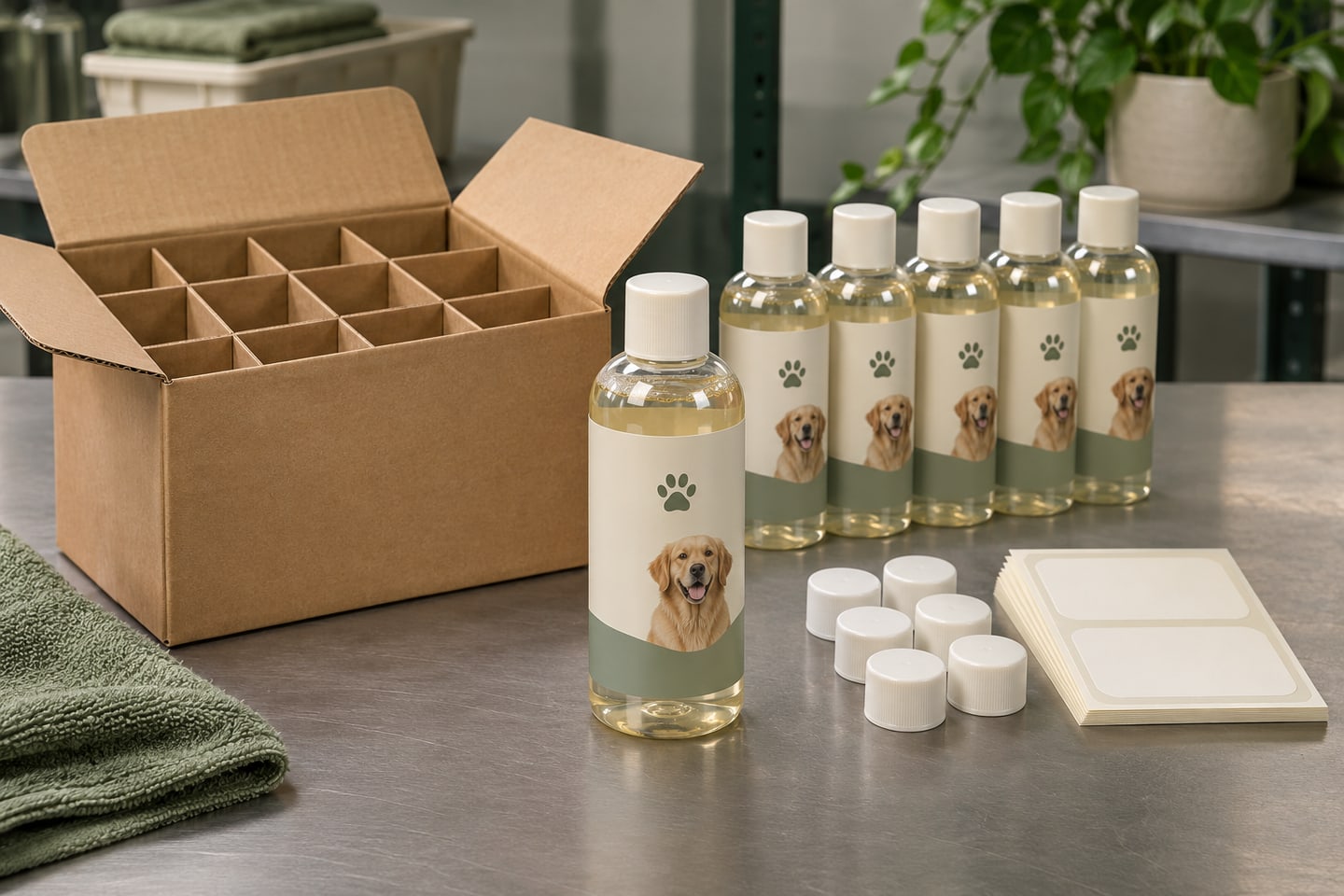
Ask for a sample filled into the final container, with a matching closure, liner and label. Check pump priming, repeat output and leakage after a closure is reopened and reclosed. Use agreed orientations and handling conditions that represent the intended sales and distribution channel. Ask who will choose and perform the packaging tests, and define acceptance criteria before testing. Use the daily pet shampoo page as a product reference and the sampling service to discuss final-package samples.
Separate a preference from a release failure
“Less fragrance” can be a refinement request. A leaking closure or a measured result outside the agreed specification calls for investigation before release. Record what failed, how it was measured, which sample or lot was affected and what will be retested. Use the certificate of analysis guide when translating a sample observation into a batch acceptance decision.
Practical guide to a two-stage approval
- Screen coded samples using agreed methods. Record version, date, water conditions, use amount, results and reviewer.
- Approve the performance target and request the final formula in the intended commercial packaging. Confirm which evidence covers that specific configuration.
- Record pass, revise or hold for appearance, use, pack and documentation. Set a date for the next decision and name the person who can release the order.
- Retain a matching reference and link it to the purchase order, finished specification and artwork version. Raise follow-up questions through the project inquiry form.
Frequently asked questions
General procurement questions
Do manufacturers charge for samples?
Policies vary with sample scope. Ask about packing, courier cost, revisions and any credit on a production order.
Can the supplier review a competitor sample?
A benchmark can clarify desired attributes. Share what you want to measure and keep the new project’s specifications and claims distinct.
Should I keep an approval sample?
Yes. Label the retained reference with its code, approval date and storage conditions and agree how long it will be kept.
Questions about dog shampoo sample evaluation
What should be on a dog shampoo sample scorecard?
Record revision, test conditions, dispense performance, lather, rinse, coat finish, pack integrity and outstanding evidence.
Can a clear sample be considered stable?
Appearance is one observation. Review changes over time, applicable test conditions and the performance of the actual package.
Does a certificate of analysis prove shelf life?
It documents the reported results for the identified batch. Assess shelf life using the evidence covering storage, time and the intended pack.
Do I need to reassess a new pump with the same shampoo?
Yes. Confirm priming, dose repeatability, leakage and use comfort for the proposed pump and bottle combination.
How should the first production batch be compared with the lab sample?
Use a signed reference and release specification. Compare the agreed attributes and check lot-linked records for any material differences.
Conclusion
Approve formula performance, final-pack usability and batch-release criteria as separate decisions. A coded reference linked to the signed specification gives both sides a clear baseline when the first order arrives.
Discuss your OEM or ODM project with MUYE
WhatsApp: +86 15346717907 · Email: adon@oempetcaresupplier.com · Website: oempetcaresupplier.com